
A tyre puncture is a hole that lets air escape, usually from a nail, screw or sharp debris in the tread. If you feel the car pull, hear flapping or see a pressure warning, slow down gradually, get somewhere safe and check the tyre before driving further. Driving on a flat for even a short distance can destroy a tyre that could otherwise have been repaired.
How to tell you have a puncture
Not every puncture is dramatic. Many are slow leaks that take days to show.
- TPMS warning. Most modern cars have a tyre pressure monitoring system. A warning light shaped like a horseshoe with an exclamation mark means at least one tyre is low.
- Pulling to one side. A soft front tyre makes steering drift toward that side.
- Vibration or noise. A rhythmic thump or flapping sound at low speed often means a tyre is very low.
- Visible sag. Walk around the car. A tyre that bulges at the bottom more than the others is probably losing air.
- Pressure drop between checks. If one tyre keeps needing air, it likely has a slow leak.
What to do on the road
Your safety comes before the tyre. On UAE highways, stopping on the hard shoulder is risky because traffic moves fast.
- Keep a firm grip on the wheel, ease off the accelerator and avoid hard braking.
- Switch on hazard lights and move to the safest available spot: an exit, petrol station or wide shoulder.
- If you must stop on the shoulder, get passengers out on the side away from traffic and stand behind the barrier if there is one.
- Place your warning triangle well behind the car if it is safe to do so.
- Decide whether to change the wheel, use a repair kit or call roadside assistance.
Do not stand between the car and traffic
On a busy road, it is often safer to call for help than to change a wheel yourself. In an emergency in the UAE call 999 for police. Many insurers and car makers include roadside assistance, so keep that number in your phone.
Spare wheel, repair kit or run-flat?
Cars come with different solutions, and it is worth knowing which one yours has before you need it.
| Option | How it works | Limits |
|---|---|---|
| Full-size spare | A matching wheel and tyre | Takes space and weight, check its pressure too |
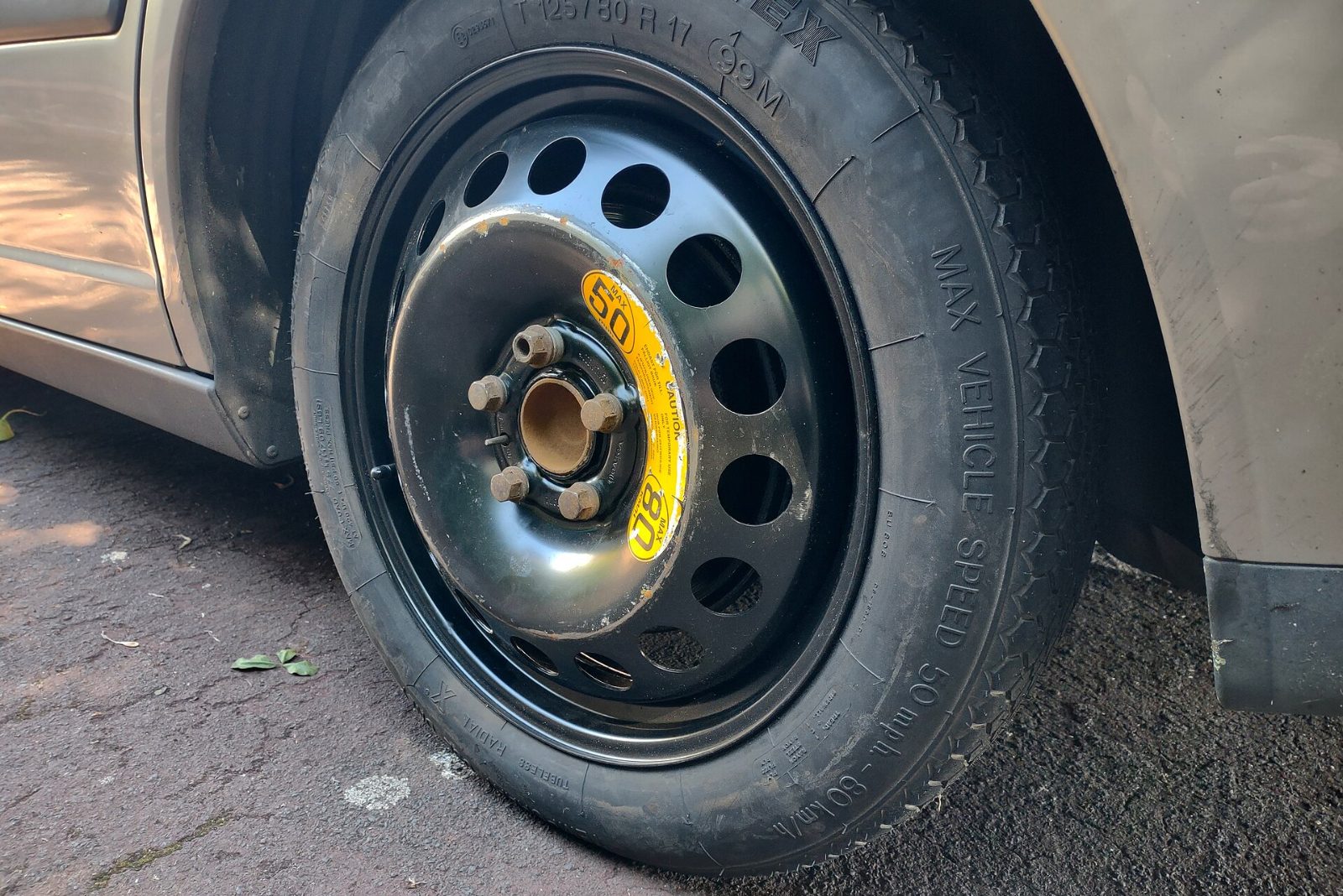
| Space-saver spare | Narrow temporary wheel | Speed and distance limits printed on the wheel or in the manual |
| Sealant and compressor kit | Injects sealant and reinflates | Only for small tread punctures; not for sidewall damage |
| Run-flat tyres | Stiff sidewalls carry the car with no air | Limited speed and distance, repair often not allowed |
If you use a sealant kit, tell the tyre shop. Some sealants make a proper repair harder, and the technician needs to clean it out of the tyre.
Can the tyre be repaired?
Many tread punctures can be fixed. Whether a repair is safe depends on where the hole is, how big it is and whether the tyre was driven on while flat.
Usually repairable
- A small hole in the central tread area, typically from a nail or screw.
- A tyre that was not driven far while underinflated.
- No other damage to the inner liner.
Usually not repairable
- Any damage in the sidewall or shoulder.
- Holes larger than the limit set by the tyre maker or repair standard.
- Tyres with internal damage from being driven flat.
- Many run-flat tyres, depending on the manufacturer’s guidance.
The correct method is a plug-patch combination fitted from inside the tyre after it has been removed from the wheel. A plug pushed in from outside without removing the tyre is a quick fix, not a permanent repair. We cover the method in more depth in our guide to tyre puncture repair.

Why heat and sand make punctures worse
Summer road temperatures in the UAE are hard on tyres. Underinflation increases flexing and heat build-up, and a slow puncture that goes unnoticed can lead to a sudden failure at highway speed.
Construction areas and the edges of desert roads also scatter nails, screws and sharp stones. Driving on soft sand at low pressure is normal off-road practice, but you should reinflate before returning to the tarmac.
Check pressures in the morning
Measure tyre pressure when the tyres are cold, ideally before driving and before the sun heats them. Use the figures on the door pillar label or in the owner’s manual, not the maximum printed on the tyre sidewall. Our pre-summer tyre checklist walks through the rest.
Preventing punctures
You cannot avoid every nail, but you can reduce the risk and catch problems early.
- Check pressures at least monthly and before long trips.
- Look over the tread for embedded objects when you wash the car.
- Replace tyres with low tread depth; worn tyres puncture more easily.
- Check the spare or repair kit every few months.
- Avoid driving close to the road edge where debris collects.
A slow leak is a warning. Fix it the same week rather than topping up the air every few days.
FAQ
How long can I drive on a punctured tyre?
Ideally, not at all once it is noticeably soft. Driving on a flat tyre damages the sidewall and inner liner, often making a repair impossible.
Is a tyre plug safe?
An external plug is a temporary measure. A permanent repair is made from inside the tyre with a combined plug and patch after inspection.
Can a puncture in the sidewall be fixed?
No. Sidewall and shoulder damage is generally not repairable because those areas flex constantly. The tyre needs replacing.
Should I replace two tyres after one puncture?
Not always. If the damaged tyre is replaced and the others are fairly new, one tyre can be enough. With large tread differences or on some all-wheel-drive cars, a tyre shop may recommend replacing a pair. Check your owner’s manual.
Sources: UAE Ministry of Interior, Michelin tyre advice, Bridgestone tyre safety
Last reviewed: 2026-11-25.